


Courage to Speak Up
Three events at the ONS Energy Conference in Stavanger in August reminded attendees of the vital importance of listening to and supporting those who directly experience the impacts of global politics and the energy industry: the people.
On 24-25 August, Stavanger City of Freedom of Expression and ICORN organised three events in collaboration with the Stavanger Symphony Orchestra during ONS 2026. The biennial energy conference is a global forum where high-ranking politicians and energy executives gather to present clean-energy futures and sustainable solutions. Yet beneath this lies a highly controversial industry deeply entangled with global conflict, resource exploitation, and systemic human rights abuses.
Two panel discussions and artistic performances featuring artists, activists, academics, city politicians, and industry representatives highlighted the themes of courage, freedom of expression, and democratic responsibility in a time marked by war, deepening polarisation, and the commercialisation of politics.
Abuses Behind Noble Intentions
'For many people in Norway, a solar panel represents something positive: clean energy, lower carbon emissions, and a more sustainable future. For me, it can mean something else as well. My older brother, Erkin Ayup, was sentenced to 14 years' imprisonment because of his ethnicity. He is working under forced-labour conditions in China’s polysilicon industry. Polysilicon is one of the essential materials used to make conventional solar panels'.
- Abduweli Ayup, Founder and Researcher, Uyghur Help
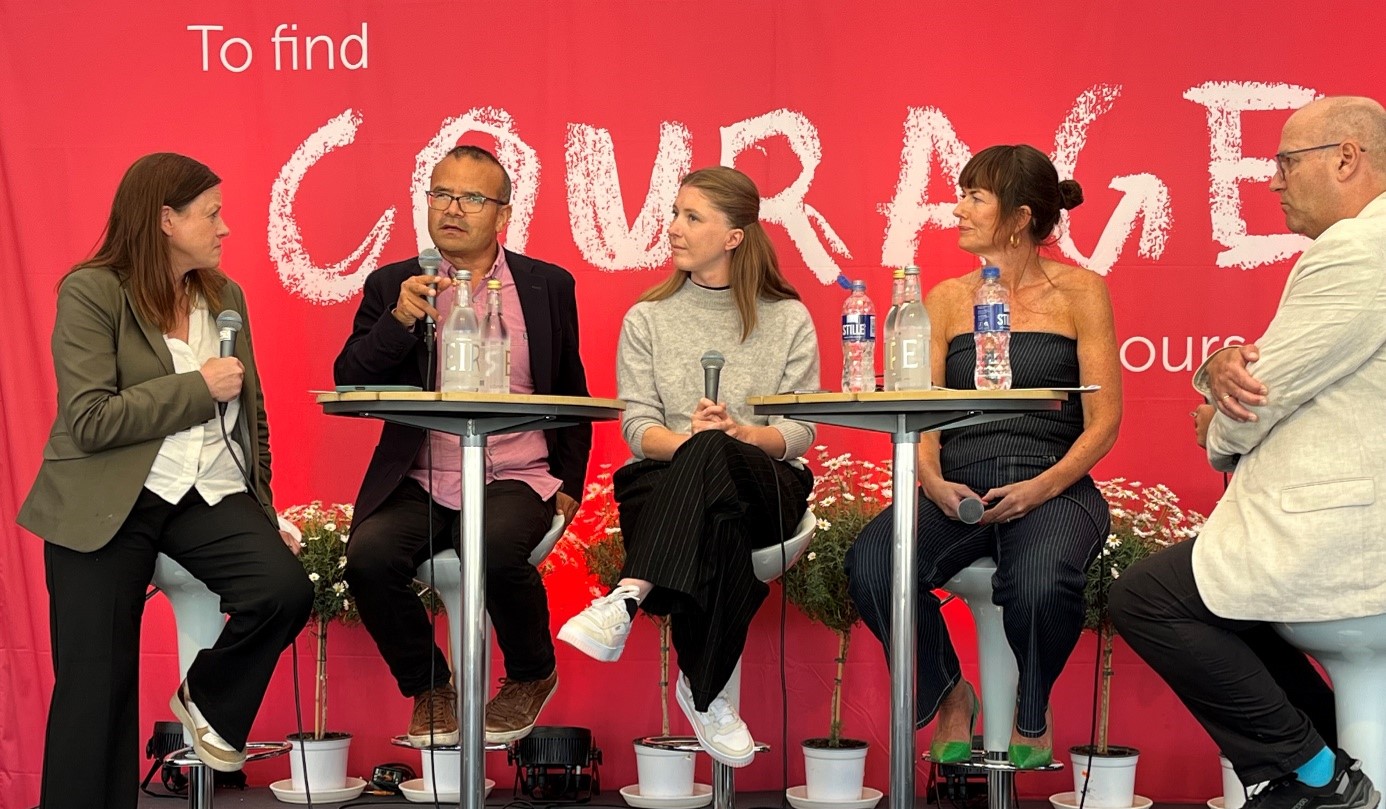
In a conversation titled Clean Energy: At What Cost?, fellow panellists Heidi Furustøl (Managing Director of Ethical Trade Norway), Abduweli Ayup (Uyghur Help), Ole Andreas Hegland Engen (Professor, University of Stavanger), and Hedda Tomine Berg (Sustainability Specialist, Comrod AS) discussed how to ensure that climate action does not harm vulnerable groups, and what societies are willing to compromise when the green transition requires cooperation with countries that do not share international laws and values.
Linguist and writer Abduweli Ayup, originally from Xinjiang, has dedicated both his professional and personal life to advocating for the human, linguistic, and cultural rights of the Uyghur people. His work has focused on Uyghurs' right to education in their mother tongue amid increasing persecution in China. Ayup was detained in a so-called 're-education' camp, where he spent a year because of his efforts to establish schools and kindergartens for Uyghur children. He came to Bergen, Norway, in 2020 and has since continued his advocacy for the rights of the Uyghur people.
During the panel, Ayup emphasised that while companies and industry actors bear responsibility for addressing abuses in supply chains, governments cannot place the entire burden on corporations and consumers when the issue is forced labour.
The Art of Peaceful Change
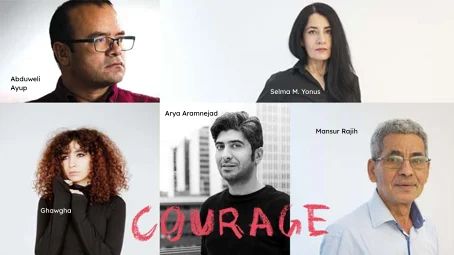
During the event Voices of Courage: The Power of Art, the audience met vocalist Ghawgha from Afghanistan, musician Arya Aramnejad from Iran, Iraqi poet, author and journalist Selma M. Younus, and Yemeni poet and human rights activist Mansur Rajih in a unique collaboration with the Stavanger Symphony Orchestra. These artists use their voices and artistic expression to speak out against injustice and stand at the forefront of efforts to defend and promote human rights and democratic values, often at great personal risk.
The artists come from countries and regions with rich artistic and cultural traditions, yet ones that remain deeply scarred by decades of conflict, foreign intervention, and shifting regional power dynamics, often driven by the global demand for the very resources negotiated and traded in nearby rooms.
This year, the far-reaching consequences of the Iranian regime’s violent crackdown on protesters following the January uprisings, combined with the subsequent US-Israeli war on Iran under the pretext of supporting the people in reclaiming power, contributed to a global energy crisis.
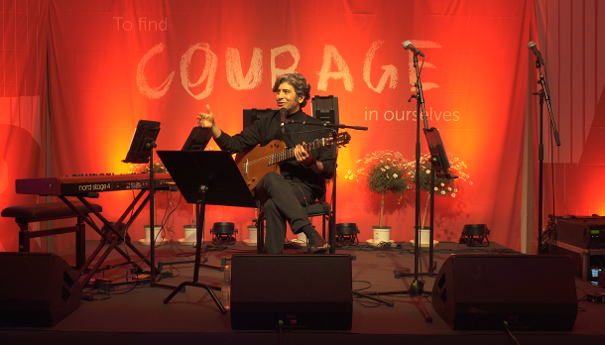
Acclaimed Iranian singer, songwriter, composer, and music producer Arya Aramnejad took the stage at ONS+. He is known for using his music to protest government oppression and human rights abuses in Iran, inspiring hope, resilience, and a yearning for freedom. His highly political songs comment on the social and political issues that have plagued the country, condemning both the crimes of the Islamic Regime and the manipulation carried out by those in power.
Despite numerous arrests, imprisonments, and restrictions on his work, Aramnejad succeeded in distributing his music underground and online, gaining immense popularity across Iran.
One of the songs he performed, The Wrong Address, was written several years ago, yet speaks directly to events currently unfolding in his homeland.
'The song The Wrong Address is a commentary on the social and political issues that have plagued the country, particularly focusing on the negative impact of oil and the manipulation by those in power. The central theme is that oil, rather than being a source of prosperity, has contributed to the country’s downfall by attracting foreign interference and empowering corrupt leaders who serve external interests rather than the people.'
Five years ago, in August 2021, US forces and their allies withdrew from Afghanistan following an agreement with the Taliban, ending two decades of military presence in the country. Soon after taking power, the Taliban barred women and girls from secondary and higher education and imposed severe restrictions on employment, freedom of expression, and freedom of movement.
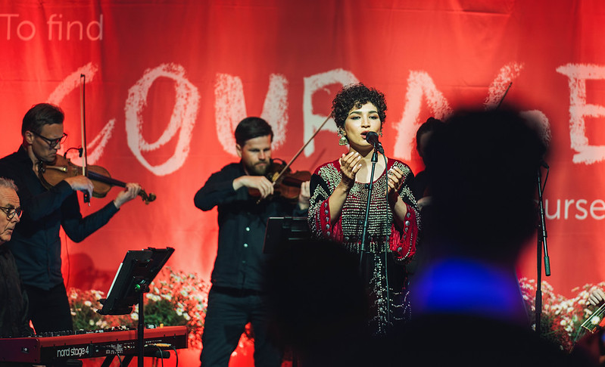
Musician, songwriter, and singer Ghawgha is known for songs about peace from her homeland, where singing is prohibited and women’s voices are not meant to be heard in public. Following the Taliban takeover of Afghanistan, she left the country and arrived in Norway in 2022. Since then, she has released two albums and performed numerous concerts around the world. In 2021, she was named one of the BBC’s 100 Most Influential Women, and in 2023 she performed at the Nobel Peace Prize Concert.
Ghawgha sings about what it is like to lose your country and your city, to leave the place you love without knowing whether you will ever return, and to witness your homeland and its people deprived of freedom. She also sings about the dangerous journeys across the sea and the experience of encountering closed borders.
The final song she performed, Kiss You, was written in Kabul. It is about protest expressed through love and defiance.
'I kiss you in front of the Taliban, and I’m not afraid of hope, I’m not afraid of tomorrow, and I’m not afraid of love'.
On War, Exile, and Resilience
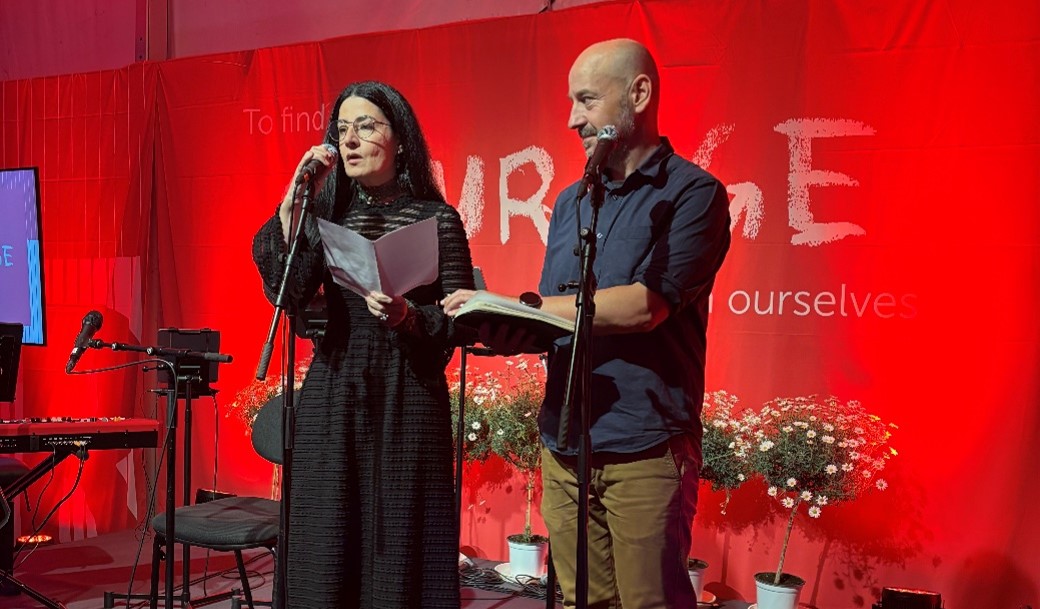
Poet, author, and journalist Selma M. Younus from Nineveh, Iraq, is recognised as a powerful and defiant voice for Iraqi women. She is a chronicler of war and exile, and of the blurring of national borders and identities. With three poetry collections and two prose books published in Arabic, her work has been translated into several languages.
One of the poems she shared reads:
Flowers don’t bud on my name.
It won’t matter where I’m buried when I die.
In Iraq, flowers do not grow.
And here...
no passerby
will leave a flower on a name
you no longer call.
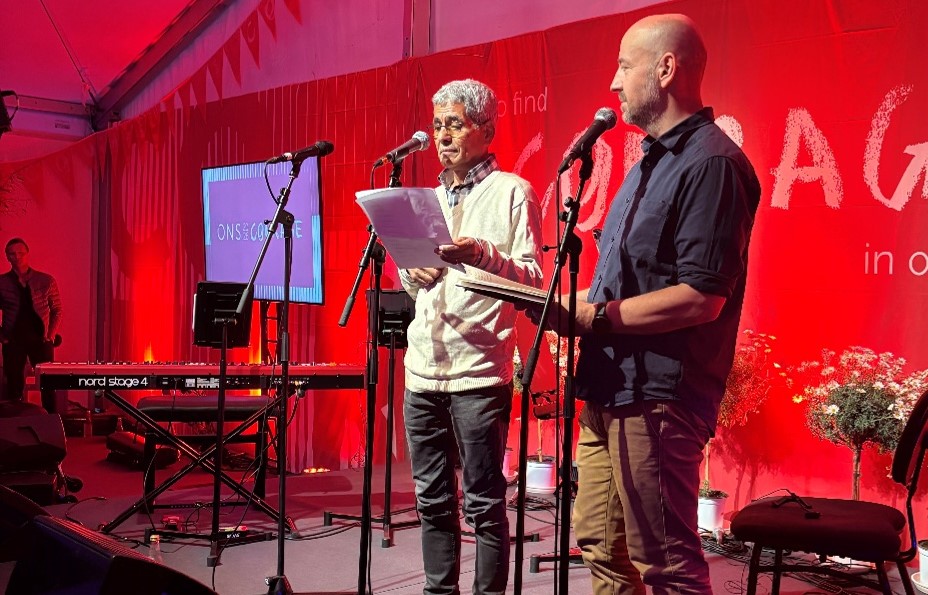
Mansur Rajih is a poet and human rights advocate from Yemen. When he arrived in Stavanger in 1996, he came directly from 15 years in prison. Rajih was president of the Yemeni Students Union and a prominent member of the National Democratic Front, one of the country’s most important opposition movements. In 1983, he was arrested by state security forces and imprisoned for 15 years on false charges in the Central Prison in Ta’iz, Yemen.
His poems were smuggled out of prison and published in newspapers throughout the Arab world. Following years of international pressure, he was finally released from prison. Even from Norway, he remains celebrated as one of Yemen’s national poets and continues his literary and political engagement.
I fought fear,
and still do,
with writing.
Each word
carved like a blade’s edge,
pulled from my chest,
plunged back in.
I fight pain.
I do not bend.
I write.
I fight oppression.
Courageous Cities in Trying Times
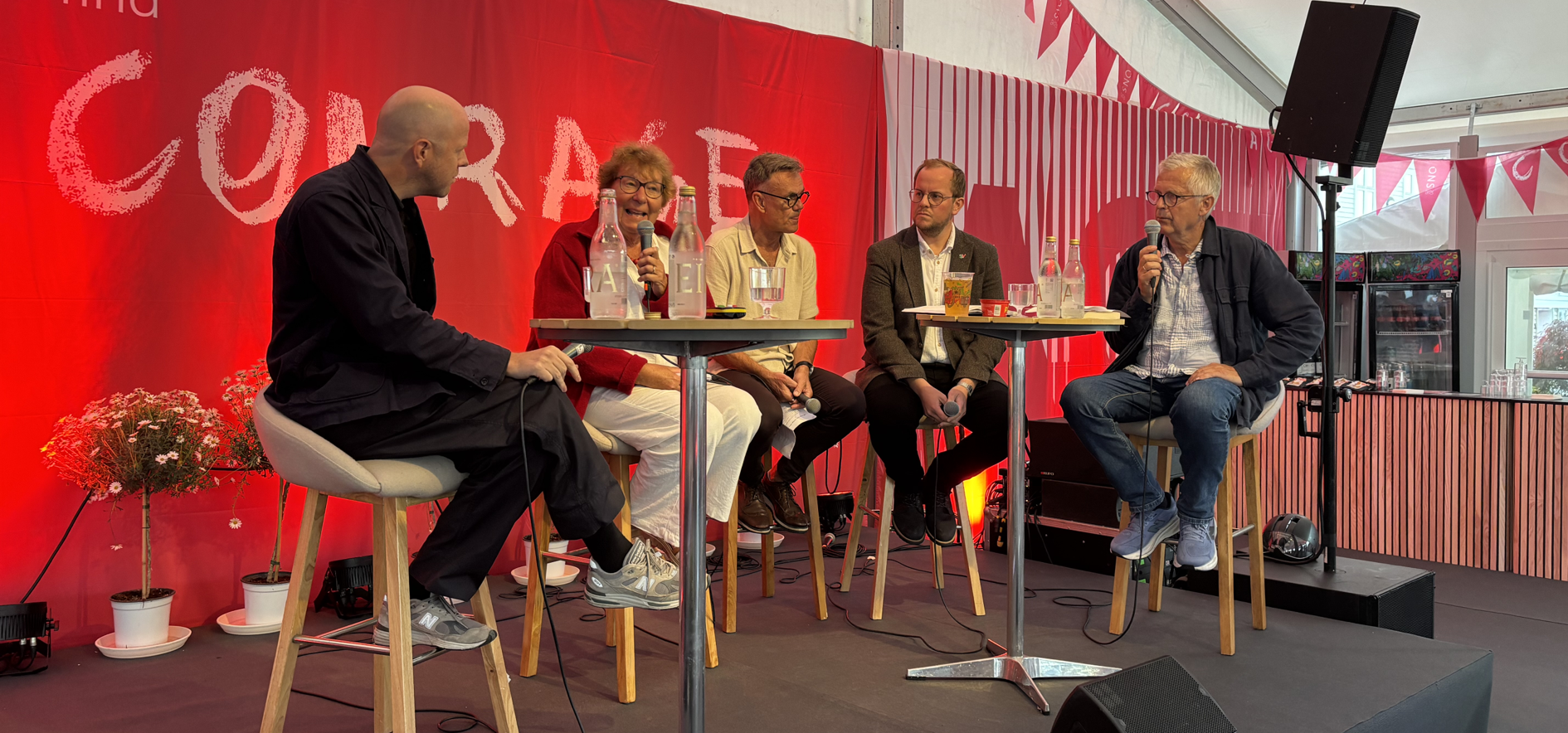
Gaza, Sudan, Yemen, Ukraine, Iran: the great powers, the United Nations, and the European Union often appear powerless as the established rules-based international order comes under increasing strain.
In his new book Why Soft Power Matters in Hard Times, Swedish journalist and author Martin Gelin argues that investments in culture and freedom of expression may be just as important as investments in tanks and AI-controlled drones in today’s geopolitical landscape.
During the panel Courageous Cities in Trying Times, Gelin spoke about the importance of soft power and was joined by Marianne Borgen (former Mayor of Oslo and ICORN Board Member), Jan Inge Reilstad (Artistic Director of KåKå and Wonderful World), and Eirik Faret Sakariassen (Leader of the Socialist Left Party in the Stavanger City Council).
Central to their discussion was how cities and civil society can build the preparedness and resilience the world needs as human rights and democracy come under increasing pressure. The panel agreed with Gelin that it is both paradoxical and worrying that rising authoritarian powers such as China and the Gulf states continue to expand their investments in soft power, while Europe and the broader democratic world appear to be continously reducing funding for arts, culture, and human rights initiatives.
Do We Dare Stand with Those Who Take Risks for All of Us?
It became publicly known in 2022 that approximately 600 solar panels manufactured by the Chinese company JA Solar had been installed on three buildings at the University of Bergen. Concerns were subsequently raised regarding the company’s upstream supply chain and its possible links to polysilicon associated with forced-labour risks. Abduweli Ayup was among those who raised these concerns.
The University of Bergen was installing solar panels to contribute to a more sustainable future. At the same time, Ayup was asking whether the materials behind those panels could be linkted to the same system of coercive labour in which his own brother was being exploited.
In the end, those concerns led to change. The University of Bergen terminated its contract with JA Solar and entered into a new agreement with a Norwegian supplier.
This year’s conference theme was 'Courage'. Who has the courage to stand up to injustice in the presence of the powerful? And do we dare to stand with those who do?

