


Hussein Al-Dahir reflects on his ICORN residency in Færder: ‘Two years of freedom to write’
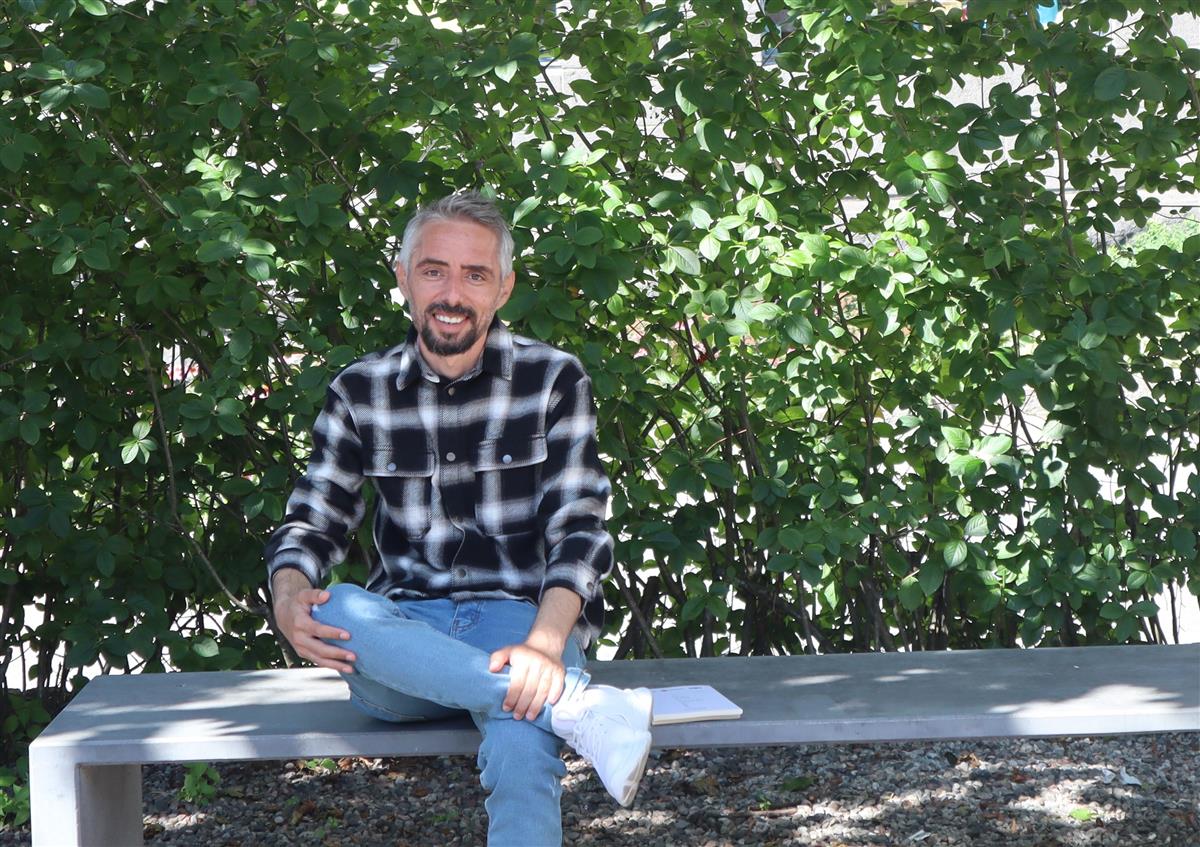
The text below was originally published in Norwegian on the official website of Færder Municipality. It includes an interview Syrian poet and writer Hussein Al-Dahir about his experiences as the ICORN resident in Færder, his literary work in Norway, and reflections on freedom, identity, and exile.
You can access the original article here.
Two years ago, Syrian author and poet Hussein Al-Dahir arrived in Færder, Norway as the municipality’s ICORN resident. Behind him lay experiences shaped by war, displacement, and uncertainty. In Færder, he found something he had long been missing: safety, freedom, and the space to write.
While many people associate summer with holidays and relaxation, the season awakens different memories for him.
Hussein says:
‘We arrived in Færder around this time of year. While many people here enjoy the summer sun, I return to my first moments of feeling safe again, to a feeling I had missed for so long’
He describes the years in Færder as a valuable experience for both him and his family.
‘This experience has given me a space of freedom to write and think without anxiety, and I can also see how it has given my family greater freedom to express themselves.’
Encountering a new culture
The transition to Norway was significant. His family had previously experienced living in a different culture, but Norway was nevertheless unlike anything they had encountered before.
He describes Norwegian culture as both open and flexible and believes this has made it easier to find his place in the local community.
‘Norwegian culture is rich in human values, and it is exciting for me to explore this culture more closely.’
As the resident in Færder, Hussein is part of ICORN, an international network that offers temporary protective residencies to persecuted writers, artists, and journalists where they can live and work in safety.
‘Through my experience with writing and journalism under difficult conditions, I know how important it is for an artist or writer to have a free and safe space. ICORN has succeeded in securing such a space for many independent voices.’
Writing to understand
War, exile, and identity are recurring themes in his work. These are not subjects he has consciously chosen, he explains, but experiences that remain part of his life.
‘I have been, and still am, in direct contact with these themes. I have been exposed to several psychological burdens, and I process and understand them through my writing.’
At the same time, he believes that distance from his homeland has provided new perspectives.
‘The distance from Syria has been an important reason why I have questioned exile and identity. It has also opened a space for me to write about the war after surviving it.’
When asked what he misses most from Syria, his thoughts turn to simple everyday moments.
‘I miss the gatherings of our neighbouring women with my mother by the roadside, where they drank tea and talked with their simple and beautiful everyday philosophy.’
Literature as testimony
The author believes literature can document war in ways that other media cannot.
‘Literature offers its own form of documentation of wars and human experiences, a form of documentation that a camera cannot capture.’
Through his writing, he seeks not only to tell stories about Syria but also about universal experiences that people around the world can recognise.
‘What I am really writing about is war as a condition, displacement, and the crisis of identity as a universal human experience.’
He points out that war and forced displacement are not unique to Syria.
‘Refugees are people like everyone else. They seek safety and stability. In the midst of all this, there are many stories and experiences that the world should be allowed to see.’
New projects in Norway
In recent years, Hussein has been working on new poems inspired by life in Norway.
‘I now have quite a number of poems that deal with my experience here in Norway, and I hope they can soon become a book.’
He also writes articles in Arabic and is working on prose texts that are currently being translated into Norwegian.
The Norwegian literary community has welcomed him warmly.
‘I have experienced a genuine interest from many Norwegians in listening to a voice that comes from another culture.’
He says that the audience’s interest during readings motivates him to continue building bridges between Arabic and Norwegian culture.
Inspiring children and young people
Through his work with The Cultural Schoolbag (Den kulturelle skolesekken), he hopes to introduce children and young people to Arab culture through literature, art, and music.
The goal is to create a vibrant and interactive cultural exchange where both Arabic and Norwegian have a place.
When asked what advice he would give to young people who want to write, his message is simple:
‘Writing can be our different voice, the voice we would never have heard without it. It can also be a way to survive.’
Shaped by life’s most difficult experiences
Looking back on his life, he says it is the hardest experiences that have left the deepest marks on his writing.
He mentions memories of imprisonment, war, insecurity, earthquakes, and flight.
‘I have confronted all this pain through my writing, and I continue to overcome it.’
During his two years as the ICORN resident in Færder, Hussein says has gained something that was previously long out of reach: the freedom to write. It is a freedom he now uses to tell stories about war, identity, hope, and human resilience.

