


SEX, POWER & BELONING: A lecture by Jude Dibia
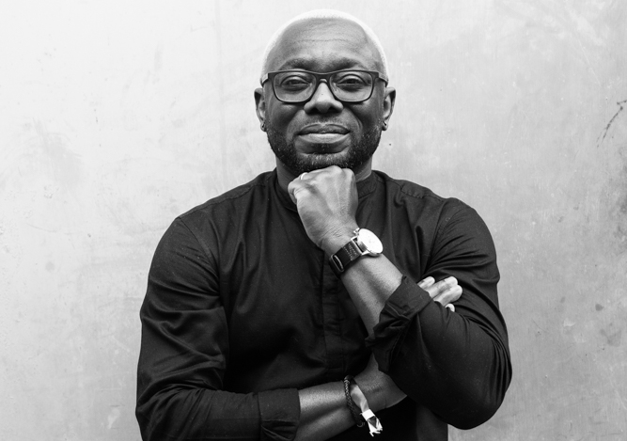
The following lecture was delivered by Nigerian-Swedish author and LGBTQ+ advocate Jude Dibia on 16 September 2026, as the opening morning lecture of Kapittel 2026 at Sølvberget Library and Cultural Centre in Stavanger, Norway. Presented as part of Global Morgen, the lecture responded to the festival's 2026 theme, SEX. Drawing on history, law, politics, literature and the lived experiences of LGBTQ+ Nigerians, Dibia examines why sexuality occupies such a charged place in Nigeria's social and geopolitical imagination. The lecture traces the relationship between colonial-era criminal law and contemporary legislation, particularly the Same Sex Marriage (Prohibition) Act, while considering the influence of religion, nationalism, public attitudes and international politics on the lives of queer Nigerians. Moving beyond law and persecution, the lecture also considers intimacy, community, resistance and everyday queer life in Nigeria, asking a larger question about citizenship and belonging: who is permitted to belong fully within the Nigerian story? This text has been adapted from the lecture as delivered for publication. References to visual material used during the original presentation have been removed, while the substance of the lecture has been retained.
SEX, POWER & BELONGING
Jude Dibia
Kapittel / Sølvberget Library and Cultural Centre
The theme of this year's festival is SEX. It is a word that can sound intimate, even playful. It suggests desire, pleasure, the body, perhaps secrecy. But I want to begin with a different proposition.
In Nigeria, sex is also political. It enters the courtroom and parliament. It enters churches and mosques. It enters newspaper headlines and police stations. It enters family conversations about marriage, children and respectability. And, for LGBTQ+ Nigerians, it can determine whether an ordinary act of intimacy is treated as evidence of something larger: immorality, foreign influence, even a failure to belong.
So, this is not going to be only a lecture about a list of rights that LGBTQ+ Nigerians possess or do not possess. Those rights matter, and we will come to the law. But I want to ask why sexuality has become such a powerful language in Nigerian political life.
Why can a country divided by ethnicity, region, class, party and religion find such remarkable agreement around homosexuality? Why does the private life of a relatively small minority carry so much symbolic weight?
To answer that, we have to move between the bedroom and the state; between history and the present; between Nigeria and the wider world. And, eventually, we must return from all those institutions to the people living inside the argument.
When I say that sex is political, I do not mean that Nigerians spend all their time discussing sex. Quite the opposite. Much of the power surrounding sexuality comes from what can and cannot be said openly.
But sexuality touches four institutions that have enormous authority in Nigerian life.
The first is law. The state decides which relationships are recognised and which forms of intimacy can expose someone to punishment.
The second is religion. Christianity and Islam are extraordinarily important public forces in Nigeria, and both supply powerful languages for talking about morality, family and sexual behaviour.
The third is family. Marriage in Nigeria is rarely imagined as the concern of two individuals alone. It can carry expectations about lineage, children, duty, respectability and continuity.
And the fourth is nation. This is where the subject becomes especially interesting. Homosexuality has repeatedly been described not simply as sinful or illegal, but as foreign — as something that does not belong to Africa, and therefore does not belong to Nigeria.
Once that happens, sexuality becomes a border.
There are people imagined as standing properly inside the nation, and others whose intimate lives are treated as evidence that they stand somehow outside it. This language became especially visible in January 2014.
President Goodluck Jonathan had just signed the Same Sex Marriage (Prohibition) Act. His spokesman, Reuben Abati, defended the decision by saying that more than 90 per cent of Nigerians opposed same-sex marriage and that the law was in line with Nigeria's cultural and religious beliefs.
I want us to pay attention to the phrase “as a people”.
It turns legislation into identity.
The argument is no longer simply that parliament has prohibited a particular relationship. It says: this law expresses who Nigerians are.
That is enormously powerful political language because it makes disagreement more difficult. If opposition to homosexuality is part of who “we” are, then where does that leave the Nigerian who is homosexual? Or bisexual? Or transgender? Are they simply citizens with a different sexuality, or have they been rhetorically placed outside the “we”?
This is one reason the phrase “homosexuality is un-African” matters so much. It does more than condemn a sexual act. It makes sexuality a test of authenticity.
But it also creates a historical question.
If we are going to invoke culture and tradition, which Nigerian history are we talking about?
This is where I want to be careful.
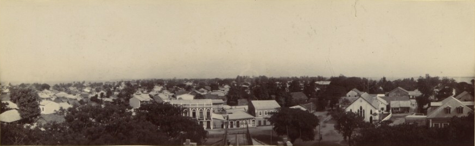
There are two very neat stories about African sexuality, and neither one is historically satisfying.
The first says that homosexuality did not exist in Africa until Europeans brought it here. That claim is contradicted by historical and anthropological evidence from across the continent.
But there is an equally tempting counter-story: that precolonial Africa was some kind of queer paradise, and that colonialism alone created sexual intolerance. That is also too simple.
Nigeria did not exist as a single precolonial society with one sexual culture. The territories that later became Nigeria contained many societies with different systems of kinship, marriage, gender, religion and authority.
And our modern words — gay, lesbian, bisexual, transgender — are themselves historically specific. We cannot simply travel backwards in time, find a practice that resembles something familiar to us, and assume the people involved understood themselves through our categories.
So, I am not going to try to prove that ancient Nigerians were “LGBTQ+”.
The more useful historical point is this: the Nigerian past was more complicated than the modern claim that there has always been one fixed, heterosexual, binary sexual order.
That complication matters because political rhetoric often depends upon pretending the past was simpler than it was.
Let me give two examples of that complication.
The first comes from Hausaland in northern Nigeria. Scholars including Rudolf Gaudio have written extensively about the 'yan daudu — literally, in a rough translation, men who act like women. 'Yan daudu have existed within Hausa social worlds for generations. Their identity can involve feminine gender presentation, particular occupations and social networks, religious life and, for some, sexual relationships with men.
But calling 'yan daudu simply “gay men” would flatten the category. Calling them simply “transgender women” would do the same. The point is precisely that the Hausa category has its own history.
The second example comes from Igbo society. The Nigerian scholar Ifi Amadiume documented institutions in which women could occupy socially male positions and become what she called “female husbands”, including taking wives within systems concerned with lineage, inheritance and authority.
Again, we must resist an easy translation. A female husband is not automatically evidence of a lesbian marriage in the modern sense. The institution could have very different social purposes.
So why show these examples at all?
Because they reveal something important: gender, marriage and intimacy in Nigerian societies have never been as historically uniform as contemporary political rhetoric sometimes suggests.
And that prepares us for the next part of the story. If the past was already complex, what happened when colonial government began translating sexuality into a formal criminal code?
Before we move into the history of the laws themselves, I want to bring Nigerian voices into the room.
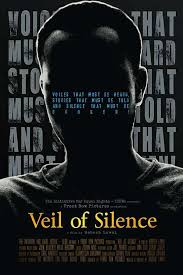
This is the opening of Veil of Silence, a documentary produced by The Initiative for Equal Rights.
There is a phrase we encounter repeatedly in arguments about sexuality in Nigeria: this is not who we are.
But laws also have histories.
So, if we want to understand how the Nigerian state came to police same-sex intimacy, we have to ask a different question: where did the law come from?
For that, we have to go back more than a century.
In 1914, Britain amalgamated the Northern and Southern Protectorates into what became colonial Nigeria.
Two years later, the colonial administration enacted a Criminal Code.
I want to make a distinction here. Britain did not arrive in a society without moral rules, sexual taboos or religious prohibitions. The claim that colonialism invented every form of African hostility to same-sex intimacy would be historically careless.
What colonial government did was different: it gave particular moral assumptions the machinery of the modern state.
A taboo can be enforced by family or community. A criminal code is enforced through police, courts and imprisonment.
Nigeria's code belonged to a wider imperial circulation of criminal law, including the Queensland code model used across parts of the British Empire.
Sexual conduct was therefore no longer simply a matter of custom, religion or social sanction. It became an offence written into the law of the colonial state.
The heading is blunt: “Offences against morality.” Section 214 then uses the phrase “carnal knowledge of any person against the order of nature” and makes the offence punishable by up to fourteen years' imprisonment.
I want us to notice two things.
First, this is a modern Nigerian statute book carrying the vocabulary of an older imperial legal tradition. I am not presenting this page as a scan of the 1916 Ordinance. It is the current consolidated Criminal Code, whose legal genealogy runs back through colonial codification.
Second, listen to the moral judgement inside the language: “unnatural”; “against the order of nature”.
Nigeria eventually became independent. The empire ended. The vocabulary remained.
That creates one of the central ironies in the debate today: a legal architecture inherited through British colonial rule can survive colonialism, become embedded in the postcolonial state, and later be defended as part of an indigenous moral order against the West.
Nigeria became independent on 1 October 1960.
Political sovereignty, however, did not automatically mean legal decolonisation.
Like many former colonies, Nigeria inherited institutions, administrative structures and laws from the colonial state. The criminal regulation of same-sex intimacy was among those inheritances.
This matters because discussions of the 2014 law often give the impression that homosexuality suddenly became illegal when President Goodluck Jonathan signed the Same Sex Marriage (Prohibition) Act.
It did not.
Same-sex sexual conduct had already been criminalised for decades.
To understand what 2014 changed, we need first to see the legal landscape that independent Nigeria inherited.
The legal landscape is also not identical across Nigeria.
In the south, the Criminal Code retained the colonial code lineage we have just seen.
Northern Nigeria developed a separate Penal Code around independence. Its genealogy is different, although it too emerged through the wider history of colonial legal codification.
Then, following Nigeria's return to civilian rule in 1999, twelve northern states introduced expanded Sharia penal codes. These created another layer in the legal regulation of sexual conduct.
We will be precise in the source material about the differences between jurisdictions rather than treating Nigeria as though one law operates everywhere in exactly the same way.
But the essential point for us here is straightforward:
By 2014, same-sex intimacy was already criminalised.
So why did Nigeria need another law?
The answer tells us something important about what the 2014 Act was designed to regulate.
The shift can be expressed quite simply.
The older criminal provisions concentrated principally on sexual conduct.
The Same Sex Marriage (Prohibition) Act reached much further.
It addressed relationships: same-sex marriage and civil unions.
It addressed association: gay clubs, societies and organisations.
And it addressed visibility: what the law calls a public show of a same-sex amorous relationship.
This is a profound expansion.
The legal object is no longer only what two people may do sexually. It is whether they can form a recognised relationship, organise together, gather as a community or make affection visible.
In other words, the law moves from policing acts towards policing queer public life.
And now we are ready to look at the Act itself — not through a summary, but through the document Nigeria actually gazetted in January 2014.
We have reached January 2014. Rather than summarising the law immediately, I want us to look at the state document itself.
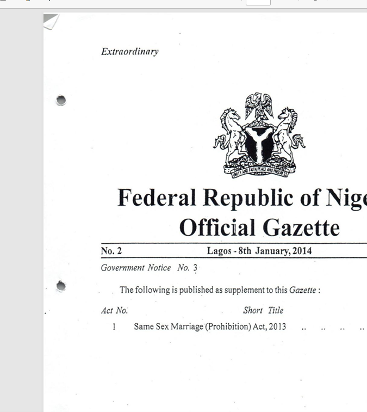
This is the Federal Republic of Nigeria Official Gazette dated 8 January 2014. The legislation is formally titled the Same Sex Marriage (Prohibition) Act, 2013. It was passed by both houses of the National Assembly in December 2013, assented to by President Goodluck Jonathan on 7 January 2014, and published in this Gazette.
The dates can look confusing at first: 2013 is part of the formal title of the Act; presidential assent came on 7 January 2014; the Gazette is dated 8 January 2014.
But the more important point is the bureaucratic ordinariness of the object in front of us. This is how the state speaks. A few pages of official paper can determine which relationships are recognised, which organisations may exist, and what kinds of affection can become criminal evidence.
So let us turn the page and look at what the Act actually reaches.
The title directs our attention towards marriage. But the text goes considerably further.
Section 4 prohibits the registration of gay clubs, societies and organisations, together with their meetings and processions. It also prohibits what the Act calls the public show of a same-sex amorous relationship, directly or indirectly.
Section 5 attaches criminal penalties. Entering a same-sex marriage or civil union carries a term of fourteen years. Participation in gay organisations, or a public show of a same-sex amorous relationship, can carry ten years.
This is why I have described 2014 as a change in the reach of the law.
The older provisions we have seen were principally concerned with prohibited sexual conduct. The SSMPA moves into relationship, association and visibility.
It asks, in effect: can queer Nigerians form a recognised relationship? Can they organise? Can they gather? Can they be publicly affectionate? Can a community make itself visible?
And once we see that, the next question is no longer simply what the law says.
It is: how did Nigerians talk about it?
That takes us from the Gazette to the newspaper front page.
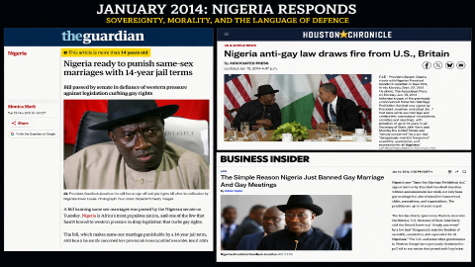
The Gazette tells us what the state enacted. The press tells us how the argument travelled.
These three clippings are useful because they capture the frame almost immediately: punishment, Western pressure, and international condemnation.
One headline says Nigeria is ready to punish same-sex marriages with fourteen-year jail terms. Another says the anti-gay law draws fire from the United States and Britain. A third asks why Nigeria banned not only gay marriage but gay meetings.
Notice what happens very quickly. A Nigerian law about sexuality becomes a story about Nigeria and the West.
And that matters because the defence of the law was never only legal. It was also geopolitical. Sexuality became a language through which Nigeria could perform sovereignty: we will decide our values for ourselves.
The complication, of course, is that the criminal-law history we have just seen is itself entangled with British colonial rule. So, the argument becomes strangely circular: an inherited colonial legal structure can be defended against Western criticism as proof of postcolonial independence.
This is where I want to resist a very easy story: enlightened West versus homophobic Africa.
Western governments did criticise the law. The United States and Britain raised concerns about freedom of association, assembly and expression. Nigerian political rhetoric could then absorb that criticism into an older and very powerful language of sovereignty: outsiders are trying to tell us how to live.
For a country shaped by colonial domination, that language has emotional and political force.
But sovereignty does not answer the human-rights question. A state can legitimately resist foreign domination and still harm its own citizens.
So, I think the more useful question is: who bears the cost when sexuality becomes a stage on which national independence is performed?
The people paying that cost are not an abstract Western constituency. They are Nigerians.
One reason the law was politically attractive was the scale of public agreement around it.
A June 2013 NOIPolls survey, cited by Human Rights Watch, found approximately 92 per cent support for the proposed law. A decade later, Pew found opposition to same-sex marriage remained almost identical among Nigerian Christians and Muslims: 97 and 98 per cent respectively.
I am putting those figures together carefully. They are different surveys, asking different questions, in different years. They should not be treated as a single dataset.
What they reveal is the durability of a political fact: sexuality can produce consensus across constituencies that disagree profoundly on many other questions.
Nigeria is religiously divided. It is regionally divided. It is ethnically and politically contested. Yet homosexuality can become a point around which Christian leaders, Muslim leaders and political actors find remarkably similar moral language.
That is why sexuality matters geopolitically. It can be used to manufacture a national 'we' precisely where the nation is otherwise fractured.
But laws do not remain inside parliament.
In February 2014, in Gishiri village in Abuja, Human Rights Watch documented a mob of about fifty people attacking men they suspected of being gay. At least fourteen men were severely beaten.
Three victims said their attackers chanted that they were doing President Goodluck Jonathan's work and 'cleansing' the community of gay people.
Human Rights Watch explicitly says it found no evidence that Jonathan instructed anyone to do this. That distinction matters.
What matters equally is what the attackers believed the law had authorised.
This is what I mean by a social permission structure. A law does not need to produce a conviction to change behaviour. It can alter what police officers, neighbours, landlords, employers, families and mobs believe they are entitled to do.
The law moves from the page into the imagination of the public.
We can see that movement in healthcare.
A prospective study published in The Lancet HIV followed men who have sex with men in Abuja before and after the law.
Before the SSMPA, 25 per cent of study visits included a reported history of fear of seeking healthcare. After the law, that figure was 38 per cent.
Healthcare avoidance rose from 20 to 28 per cent.
Those are not simply attitudes. They affect whether someone enters a clinic, tells a doctor the truth, tests for HIV, begins treatment or returns for care.
The state may imagine it is legislating morality. The clinic experiences the consequences as public health.
This is one of the reasons I resist the phrase 'private matter'. The law can enter the consulting room before anyone enters a courtroom.
And then there is the phone.
For many queer Nigerians, a phone is one of the places where private life becomes possible. You can find another person. You can flirt. You can talk before deciding whether it is safe to meet. You can discover a community you may not have in your immediate physical world.
But secrecy produces vulnerability too.
In Nigeria the word 'kito' has become shorthand for a form of entrapment in which someone poses as a potential date, often online, and the encounter becomes extortion, assault, robbery or threatened outing.
The 2024 Thomson Reuters Foundation reporting follows people targeted through dating apps, but it also shows queer Nigerians fighting back: warning one another online, checking profiles, documenting perpetrators and organising community responses.
CNN's reporting on queer women shows that the danger is not confined to gay men. Women described online relationships turning into assault, extortion and threats of exposure.
So, the phone carries three things at once: desire, risk and community knowledge.
Someone wants a date. That very ordinary desire can require an extraordinary risk calculation.
In 2020, the EndSARS protests created another important moment.
Queer Nigerians joined demonstrations against police brutality and made an argument that should have been obvious: police violence was already part of queer life.
Protesters carried signs linking the way they walked, dressed or were perceived to extortion, beating and police harassment. The hashtags #QueerLivesMatter and #QueerNigerianLivesMatter entered the wider EndSARS conversation.
That visibility was significant, and it was contested. Some queer protesters also faced hostility from fellow demonstrators who accused them of hijacking the movement.
That contradiction matters. A movement can demand freedom from state violence while reproducing exclusion inside its own ranks.
But the visual and social record of queer Nigerians at EndSARS refuses an older image of LGBTQ+ Nigerians only as people hiding, fleeing or being acted upon.
They are citizens making claims on Nigeria in their own names.
At this point I want to resist something that happens easily in lectures like this.
If you encounter queer Nigeria only through international human-rights reporting, you tend to meet people at the moment something terrible happens to them: arrest, assault, blackmail, expulsion, flight.
But nobody lives entirely inside those moments.
KitoDiaries, a Nigerian queer-positive online blog, gives us another kind of archive. Look at the titles: The Beautiful Gift of Having a Queer Sibling. What Acceptance From A Loved One Should Look Like. I Love You. Love and Sex in the City. The Men of Port Harcourt.
People complain about men. They talk about sex. They come out to siblings. They gossip. They fall in love. They get their hearts broken. They write fiction. They warn one another about dangerous dates. They make jokes.
That ordinariness matters politically.
The demand is not merely to be rescued from violence. It is the right to an ordinary human life: intimacy, boredom, family, pleasure, mistakes, friendship, ageing.
And because this festival's theme is SEX, I think this is important: sex is not only something the state regulates. It is also something people desire, negotiate, enjoy, regret, joke about and attach meaning to.
My own relationship to this history is also literary.
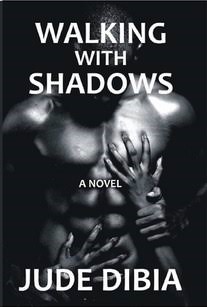
Walking with Shadows was published in 2005, almost nine years before the SSMPA.
When I wrote it, I was not trying to produce a policy paper or a human-rights argument. Fiction allowed me to enter a place public language rarely entered: the interior life of a Nigerian gay man.
Political rhetoric flattens people into categories: homosexual, criminal, sinner, victim, activist.
A novel can restore contradiction.
Adrian, the central protagonist, can be a husband, a father, a son, a colleague, a friend and a lover at the same time. His sexuality matters enormously, but it is not the total measure of his humanity.
For me, that was one of fiction's possibilities. Before the political argument is settled, a reader has already had to inhabit another person's fear, tenderness, selfishness, desire and need to belong.
Writing became another way of contesting who was allowed to exist inside the Nigerian story.
I want to end where we began, with the word SEX.
Over these forty-odd minutes, that word has accumulated other meanings: law, empire, faith, family, policing, health, pleasure, fear, resistance and belonging.
Nigeria is changing, but slowly and unevenly.
The Initiative for Equal Rights' 2024 national survey found that 66 per cent of respondents supported criminalisation of homosexuality. That remains a large majority. But TIERs also notes that this represents a decline from 92 per cent in 2013.
We should not turn that movement into a comforting story of inevitable progress. The same 2024 survey records extremely high levels of social discomfort with LGBTQI+ people.
The contradiction is the point. Societies change through arguments, proximity, generations, stories and the slow erosion of what once seemed unquestionable.
So the question facing LGBTQ+ Nigerians is larger than whether Nigeria will someday permit same-sex marriage.
It is whether citizenship can be conditional on heterosexuality.
Whether a Nigerian can be fully Nigerian without performing the sexuality that family, religion or state expects.
And perhaps the question travels beyond Nigeria.
Whenever a society decides that one group's intimacy is evidence against its belonging, what else becomes possible?
Who gets to belong?
Thank you.
Selected Sources
• Vanguard, 13 January 2014, “Jonathan signs bill banning same-sex marriage.”
• Rudolf P. Gaudio, Allah Made Us: Sexual Outlaws in an Islamic African City (2009), and related scholarship on ’yan daudu.
• Ifi Amadiume, Male Daughters, Female Husbands: Gender and Sex in an African Society (1987).
• Veil of Silence, documentary produced by The Initiative for Equal Rights (TIERs).
• Criminal Code Act, section 214, Laws of the Federation of Nigeria.
• Federal Republic of Nigeria Official Gazette, No. 2, Lagos, 8 January 2014, Vol. 101: Same Sex Marriage (Prohibition) Act, 2013.
• The Guardian, 29 November 2011, “Nigeria ready to punish same-sex marriages with 14-year jail terms.”
• Associated Press / Houston Chronicle, 13 January 2014, “Nigeria anti-gay law draws fire from U.S., Britain.”
• Business Insider, 14 January 2014, “The Simple Reason Nigeria Just Banned Gay Marriage And Gay Meetings.”
• Human Rights Watch, Tell Me Where I Can Be Safe: The Impact of Nigeria’s Same Sex Marriage (Prohibition) Act (2016).
• Pew Research Center, 2023 survey data on attitudes towards same-sex marriage in Nigeria.
• Schwartz et al., The Lancet HIV (2015), study of the immediate effect of the Same Sex Marriage Prohibition Act on stigma, discrimination and engagement with HIV services in Abuja.
• Context / Thomson Reuters Foundation, 29 April 2024, “‘I had been set up’: LGBTQ+ Nigerians battle dating app traps.”
• CNN As Equals, January 2024, reporting on queer women in Nigeria and the dangers of finding love online.
• KitoDiaries, Nigerian queer community writing, storytelling and community safety archive.
• Reporting by The Continent, them and openDemocracy on queer Nigerian participation in #EndSARS, 2020.
• The Initiative for Equal Rights (TIERs) / NOIPolls, Social Perception Survey 2024.
• Jude Dibia, Walking with Shadows (first published 2005).

